
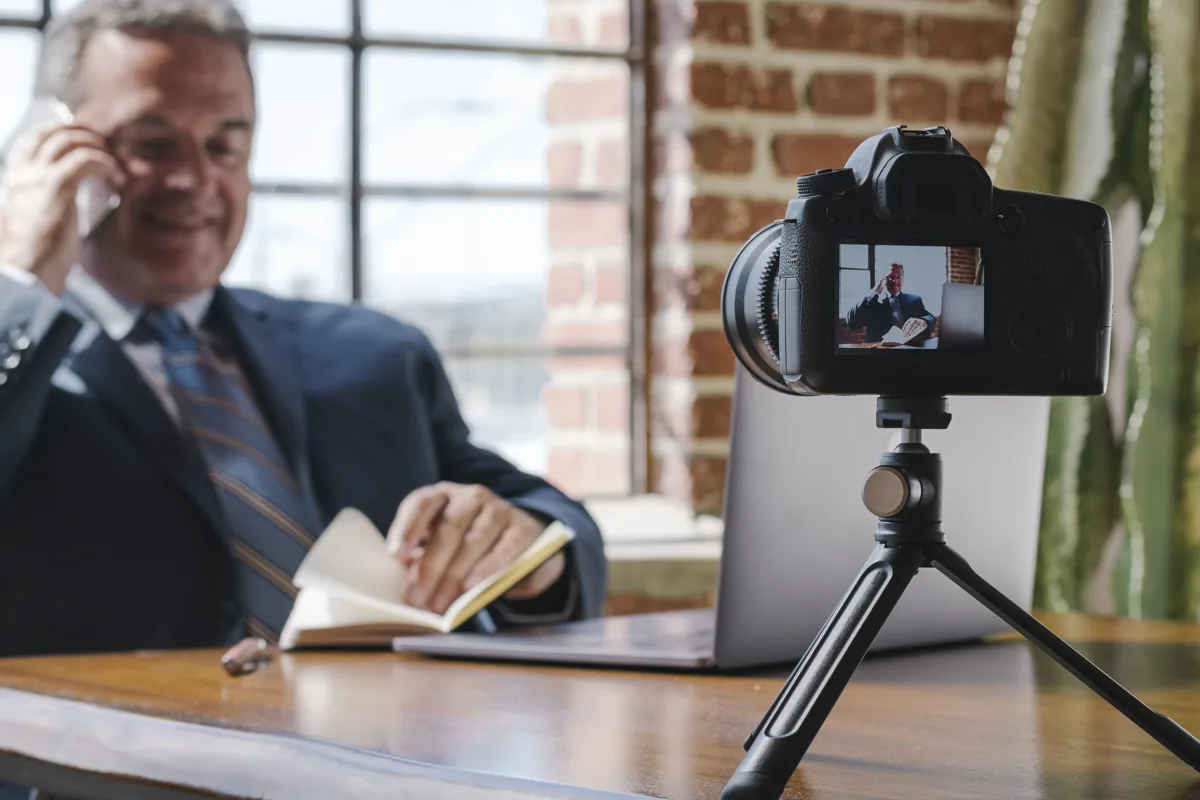
Attorney video advertising rules start from one point: a law firm video is attorney advertising, held to the same false-or-misleading standard as a practice area page.
Video adds problems a page never has. An actor can look like the lawyer, and a disclaimer can flash by too fast to read.
Each state’s rules control, and they change: New York rewrote its rule in June 2026.
Law firm videos can include testimonials, case results and actors under the ABA Model Rules and in Florida, New York and Texas, on each state’s terms.
A named lawyer or firm answers for the content.
Bar Rules Do Not Ban Testimonials or Actors in Law Firm Videos
The ABA Model Rules do not ban testimonials or actors in law firm videos. A law firm video follows the same attorney advertising ethics rules that govern the firm’s website.
ABA Rule 7.2(a) says a lawyer “may communicate information regarding the lawyer’s services through any media.” Rule 7.1 sets one test: nothing “false or misleading.”
Under the ABA’s commentary on Rule 7.1, an appropriate disclaimer “may preclude a finding that a statement is likely to create unjustified expectations or otherwise mislead the public.”
How a Video Becomes Misleading Even When Every Line Is True
A law firm video can mislead even when every line is true. The ABA comment to Rule 7.1 says, “Misleading truthful statements are prohibited by this Rule.” Video does it three ways:
- A large verdict can create “an unjustified expectation.” Texas Rule 7.01(g) adds that an advertised verdict later reduced, reversed or settled for less needs “the amount of money that was ultimately received by the client.”
- An actor can be taken for the lawyer. Under Texas Rule 7.01, Comment 3, that is misleading “if there is a substantial likelihood that a reasonable person will conclude that the actor is the lawyer who is offering to provide legal services.”
- A disclaimer can be unreadable. Texas Comment 6 says written statements must appear “in a size and font, and for a sufficient length of time, that a viewer can easily see and read the statements.”
For scripted explainer videos for law firms, compliance starts in the script, before filming.
What Florida, New York, and Texas Require in a Law Firm Video
Florida’s rules name dramatizations and actors directly. The Florida Bar’s advertising checklist asks whether an ad includes a dramatization, or an actor portraying a professional, that a reasonable viewer would not recognize without “a clear and conspicuous disclaimer” (Rules 4-7.13(b)(6) and (b)(7)). It asks whether testimonials include “a disclaimer that prospective clients may not receive the same or similar results” (Rule 4-7.13(b)(9)). Under the Bar’s checklist for video sharing channels, “A law firm cannot claim certification.”
New York’s Rule 7.1 changed on June 1, 2026, under a Joint Order of the Appellate Division dated May 27, 2026. The current rule follows the ABA text: nothing false or misleading, in any media, and certification claims must name an approved or accredited certifier. It has no separate testimonial, actor or past-results clause.
Texas addresses actors and on-screen disclaimers in its Rule 7.01 comments, and Rule 7.01(g) governs verdicts later reduced or reversed.
This is general information, not legal advice; check your state bar’s current rules before a video runs.
How to Review a Law Firm Video Before It Runs
A law firm video review before release covers four checks.
Step 1: Name the Responsible Lawyer
Name the lawyer responsible for the video. ABA Rule 7.2(d) requires “the name and contact information of at least one lawyer or law firm responsible for its content”; Texas Rule 7.02(a) is similar.
Step 2: Check Every Claim
Check each result and certification claim against the case file before filming, and cut any claim the firm cannot document.
Step 3: Mark Every Actor and Dramatization
Flag every actor and dramatized scene, and add your state’s required disclaimer, spoken clearly and shown long enough.
Step 4: Check Filing and Keep Records
The Florida Bar’s video checklist exempts a firm’s own channel videos unless sponsored, boosted or promoted, which matters for short-form clips posted to social channels. Texas requires filing within 10 days after dissemination unless exempt. Keep the dated final cut and script.
Frequently Asked Questions
A law firm can use actors in a video ad if the portrayal does not mislead. The Florida Bar’s advertising checklist asks for a clear and conspicuous disclaimer (Rule 4-7.13(b)(7)); Texas applies a reasonable-person test.
A law firm video that mentions past results needs a disclaimer where state rules call for one. The Florida Bar’s advertising checklist asks for one in testimonials (Rule 4-7.13(b)(9)). New York’s current rule prescribes no wording.
Law firm videos must be filed in some states. The Florida Bar’s guidance under Rule 4-7.19 exempts own-channel videos unless boosted; filed ads go in at least 20 days before first use. Texas requires filing within 10 days after dissemination unless exempt.
A law firm marketing video must name at least one responsible lawyer or firm under ABA Rule 7.2(d) and New York Rule 7.1(d). Texas Rule 7.02(a) requires the name of the lawyer responsible for the ad’s content.
- The baseline is ABA Rule 7.1: nothing false or misleading. Rule 7.2(a) allows any media.
- TFlorida’s rules and Texas’s official comments address actors, dramatizations and on-screen disclaimers.
- New York’s rewritten Rule 7.1, effective June 1, 2026, has no actor or testimonial clause.
Attorney Video Advertising Rules Start With the Script
Many compliance questions in a law firm video are settled when a lawyer reviews the script before filming. Lexicon writes attorney-reviewed scripts and content for law firms. Call 877-486-8123 or contact us online to discuss your next video.